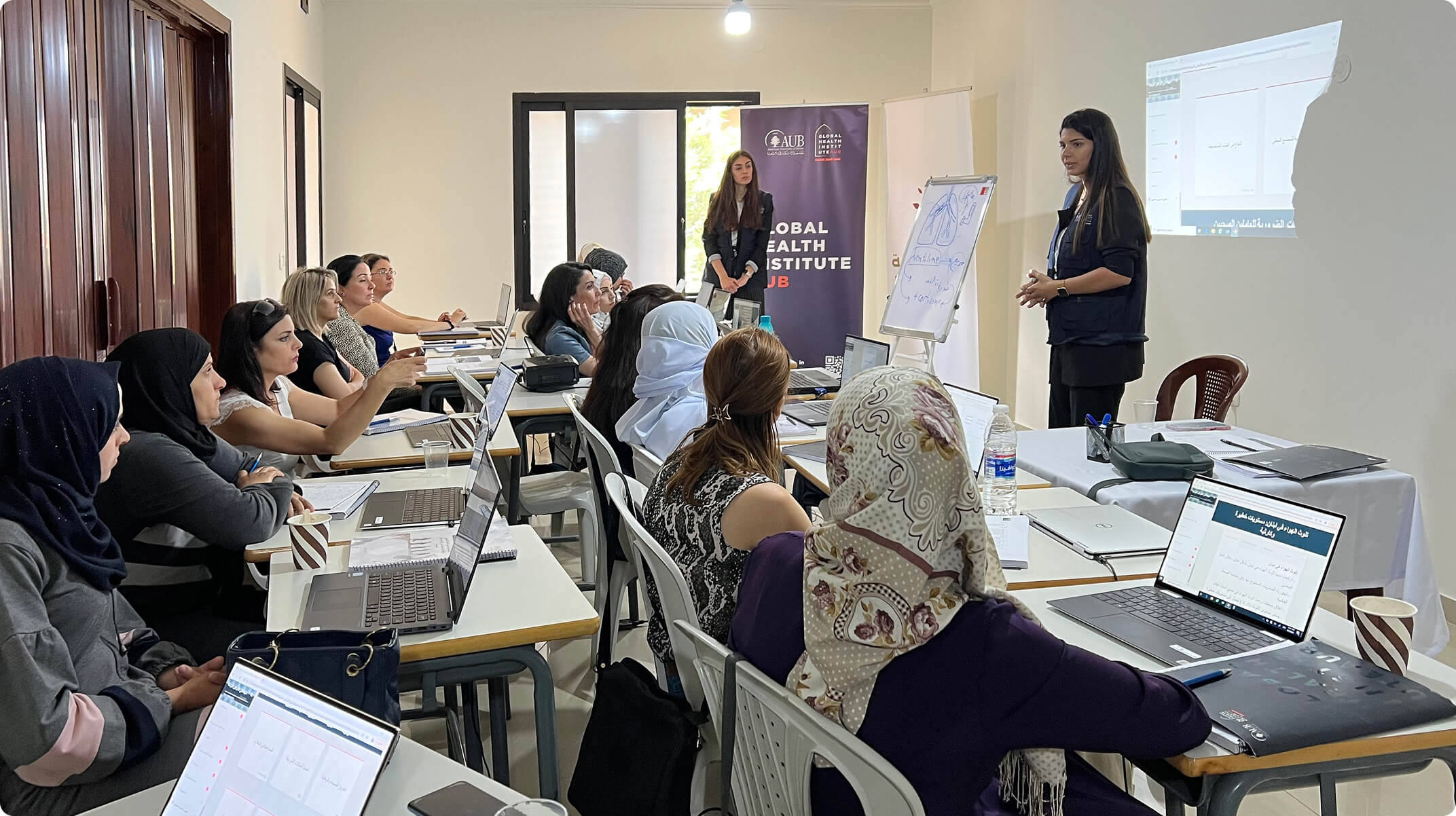
The Mobile University for Health (MUH) at the Global Health Institute trains Community Health Workers (CHWs) to enable greater access to healthcare across underserved communities.
Type: Grant
Region: Lebanon
Sector: Access to Healthcare, Economic Empowerment
Approval year: 2026
Future of work, training programs; women-focused health initiatives, raising health knowledge and awareness
A program to scale the Mobile University for Health (MUH), an initiative by the Global Health Institute (GHI) at the American University of Beirut (AUB). The MUH is a piloted and evaluated capacity-building model that enables underserved women to serve as Community Health Workers (CHW) through certificate programs tailored to individuals without a formal health background. The model aims to enhance graduates’ employability and economic inclusion while preparing them to play a supportive role in community health, helping extend the reach of health services and promote access to care in underserved and hard-to-reach communities.
Established in 2017, The Global Health Institute at AUB is the first freestanding institute in the MENA region committed to pioneering solutions to global health challenges, prioritizing the unique needs of the MENA region.
Vulnerable populations across the MENA region face critical and compounding health and development challenges, limited access to quality healthcare, severe shortages in skilled health and humanitarian workforces, and growing impacts of conflict, displacement, and public health emergencies. These structural gaps disproportionately burden already marginalized communities.
The GHI Mobile University for Health serves predominantly low-income and crisis-affected populations, including Lebanese communities, Syrian and Palestinian refugees, and host populations. Its programming prioritizes women and girls across socio-economic status. Civil society organizations, frontline health workers, and humanitarian professionals are also key constituencies.
For the last decade, Lebanon’s health system has been severely strained due to:
One strategy to address these challenges is task shifting. Endorsed by the WHO, task shifting involves allocating certain tasks or roles to trained individuals from the community known as Community Health Workers (CHW), which can help with prevention, control, referral, and management of diseases.
This is a four year grant to train 100 women as community health workers, create communities of practice to reach underserved communities, and digitize two health certificates focused on women’s health and non-communicable diseases (NCDs). The grant will further establish an Employability Unity that facilitates the connection of graduate women to potential employment opportunities.